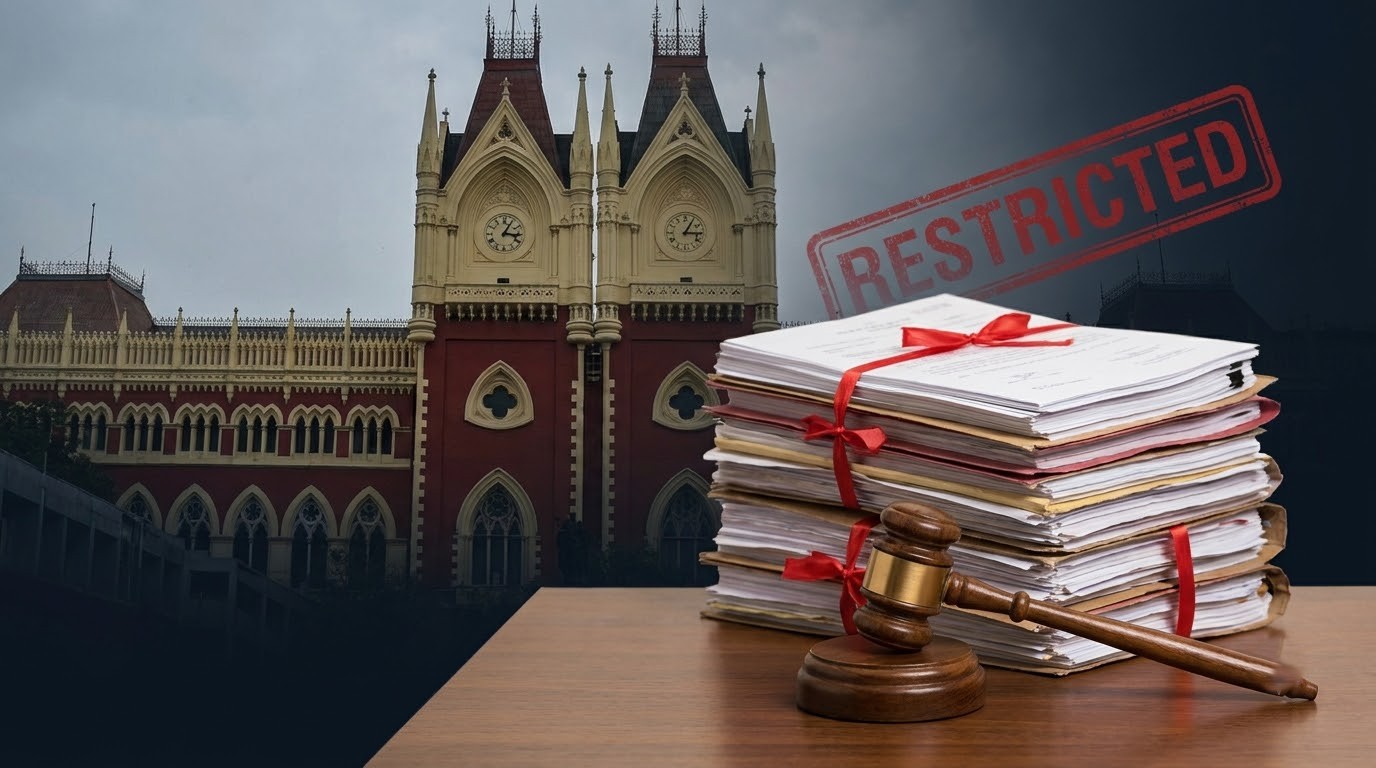
The Calcutta High Court, in a recent judgment, has directed the State of West Bengal to seriously consider formulating and enacting a dedicated legal framework to address the growing menace of vexatious litigation. The observation came during the hearing of a petition filed by a habitual litigant who had repeatedly approached the court with public interest litigations (PILs) that were found to lack substantive merit and were deemed to be filed with an oblique motive.
The Division Bench, comprising Justice [Name Redacted] and Justice [Name Redacted], noted that the petitioner in question had a long-standing pattern of filing PILs on trivial or already adjudicated matters, thereby causing unnecessary drain on judicial resources and obstructing the genuine redressal of public grievances. The Court expressed concern that such conduct undermines the credibility of the PIL mechanism, which is intended as a tool for social justice and not as a means for personal score-settling or publicity-seeking.
While declining to entertain the present PIL on the grounds that it was premature, misconceived, and filed despite prior warnings, the Court went a step further by directing that the petitioner shall not file any fresh PIL in the Calcutta High Court without first obtaining leave of the Court. This restrictive measure is intended to act as a deterrent against the filing of frivolous or vexatious petitions under the guise of public interest.
More significantly, the Court took cognisance of the systemic challenge posed by habitual litigants who exploit the openness of the PIL jurisdiction. It observed that while the PIL tool remains vital for democratic accountability, its misuse necessitates a legislative response. The Bench explicitly urged the State Government to examine the feasibility of drafting and enacting a law akin to those existing in certain other jurisdictions, which provide for the identification and regulation of vexatious litigants through procedural safeguards such as prior leave requirements, cost sanctions, and monitoring mechanisms.
The Court clarified that its observations and directions are not intended to curtail legitimate public interest advocacy but to preserve the integrity of the judicial process. It emphasized that any future legislation must strike a balance between preventing abuse and safeguarding the bona fide right of citizens to approach the court on matters of public importance.
The judgment further noted that the inherent jurisdiction of the Court to manage its own processes and prevent abuse of procedure allows for interim restraints, but a statutory framework would provide greater clarity, consistency, and effectiveness in dealing with repeat offenders. The Bench referred to precedents where courts have highlighted the need for legislative intervention to complement judicial discretion in curbing misuse of PILs.
In disposing of the petition, the Court imposed no costs on the petitioner, taking into account the individual’s financial circumstances, but made it clear that any future non-compliance with the leave requirement would be viewed seriously and could invite appropriate consequential orders, including the imposition of exemplary costs.
The directive to the State Government is recommendatory in nature but carries considerable weight, given the Court’s concern over the systemic impact of vexatious litigation on judicial efficiency. The West Bengal administration is now expected to evaluate the suggestion and determine the appropriate legislative course, if any, to be pursued in the matter.