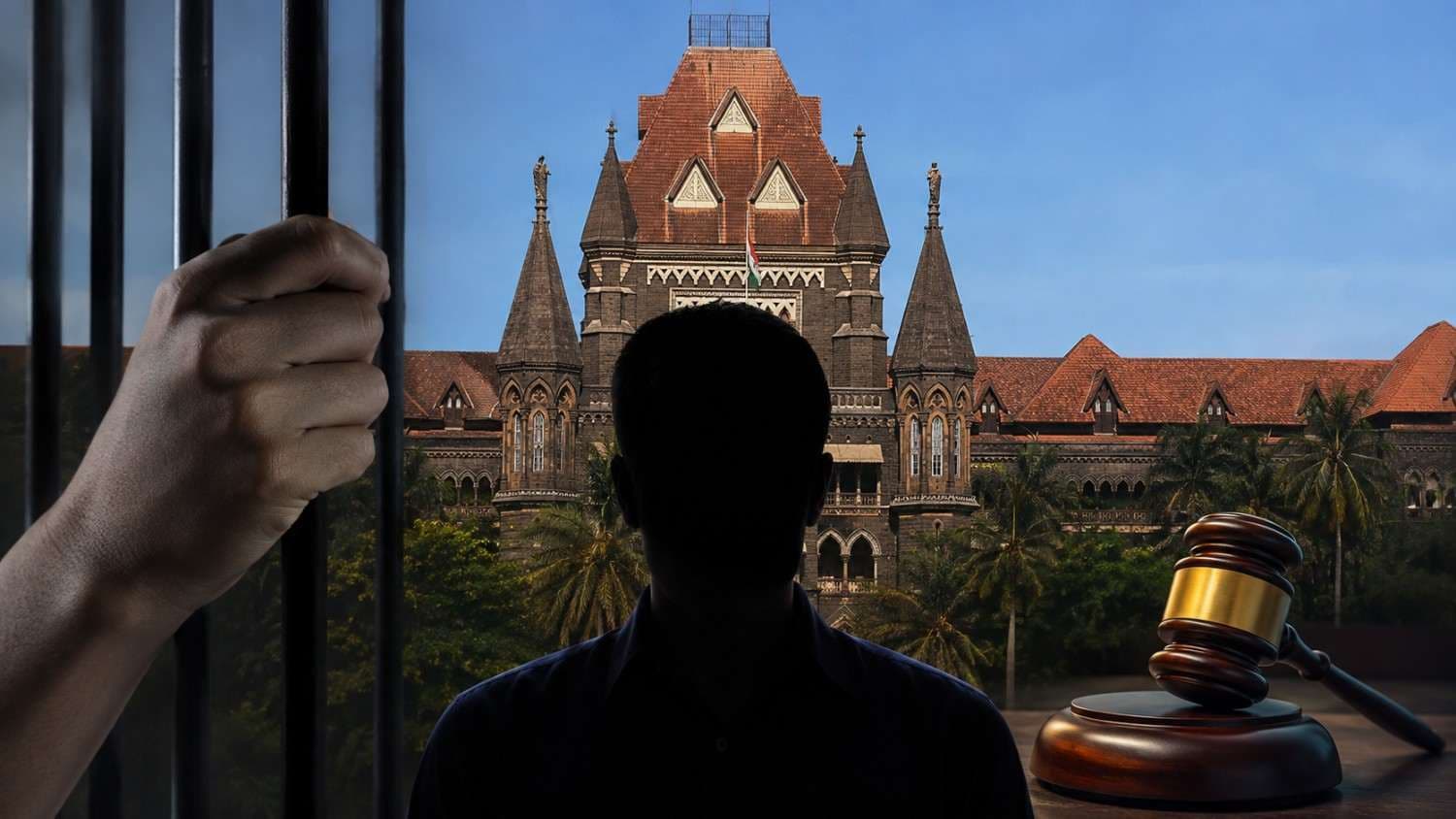
The Bombay High Court on Tuesday, August 18, 2026, granted bail and suspended the life sentence imposed on Sachin Andure, a convicted accused in the murder of Dr Narendra Dabholkar. The order was passed by a division bench comprising Justice Sarang Kotwal and Justice Ranjitsinha Bhonsale. A detailed copy of the order is yet to be made available for public access.
Andure, through his counsel Virendra Ichalkaranjikar, had moved an application seeking bail and suspension of sentence pending the final disposal of his appeal challenging the judgment of the special UAPA court delivered on May 10, 2024. That judgment had convicted Andure and his co-accused Sharad Kalaskar and sentenced them to life imprisonment.
Among the primary grounds raised in support of the bail application was the absence of a Test Identification Parade (TIP) conducted by the Central Bureau of Investigation (CBI) during the investigation. Andure’s counsel argued that certain witnesses had directly identified him in court without undergoing a formal identification procedure, raising concerns about the reliability of such identifications.
Further, discrepancies in the eyewitness testimonies were highlighted. Some witnesses claimed to have seen Andure shooting Dr Dabholkar, while others denied seeing him at the scene of the crime. These inconsistencies were submitted as a basis to question the certainty of identification and the strength of the prosecution’s case.
Another significant ground relied upon was the prolonged period of incarceration already undergone by Andure. His counsel contended that his appeal challenging the special court’s verdict was unlikely to be taken up for hearing in the near future, thereby justifying the grant of bail to prevent unnecessary detention during the pendency of the appeal.
The Dabholkar family opposed the bail application, asserting that granting bail to a convicted accused in such a high-profile case would send an incorrect message to society. They emphasized that Dr Narendra Dabholkar, along with other rationalists and thinkers such as Comrade Govind Pansare, Journalist Gauri Lankesh, and MM Kalburgi, had been victims of a similar pattern of violence aimed at silencing voices opposing superstition and promoting scientific temper.
The family’s opposition was rooted in the argument that the murder was part of a well-planned conspiracy to eliminate individuals advocating rationalism and challenging regressive beliefs. They maintained that the acquittal of certain accused by the special court did not negate the existence of a broader conspiracy.
It was noted that the special UAPA court had convicted Andure and Sharad Kalaskar under Section 302 (murder) read with Section 34 (common intention) of the Indian Penal Code. However, the court had acquitted other co-accused — Dr Virendra Tawade (alleged mastermind), Vikram Bhave, and advocate Sanjeev Punalekar — of charges relating to murder, common intention, and criminal conspiracy under Section 120B of the IPC.
Furthermore, the special court did not convict any of the five accused under Section 16 of the Unlawful Activities (Prevention) Act (UAPA), nor were any convictions recorded under the relevant provisions of the Arms Act.
Dr Narendra Dabholkar, the founder of the Maharashtra Andhashraddha Nirmoolan Samiti, was shot dead by two individuals on a motorcycle during his morning walk in Pune on August 20, 2013. The Central Bureau of Investigation (CBI) took over the investigation in 2014 following a directive from the Bombay High Court. The CBI’s investigation identified Andure and Kalaskar as the perpetrators of the crime.
The trial in the case commenced in 2021, although the sessions case had originally been instituted in 2016. The prosecution had argued that the murder was part of a larger conspiracy to intimidate and eliminate individuals engaged in rationalist activism and the eradication of superstition.
The defence, meanwhile, maintained that the accused were affiliated with the right-wing organization Sanatan Sanstha and had acted to instil fear among those opposing superstitious practices.
In 2015, the Dabholkar family had petitioned the Bombay High Court for the constitution of an independent Special Investigation Team (SIT) to investigate the murder. The High Court began monitoring the investigation in August 2015. However, in December 2022, the High Court decided to discontinue its monitoring, expressing satisfaction with the progress of the trial proceedings.
Following the special court’s verdict in May 2024, Dr Dabholkar’s family, led by his daughter Mukta, filed an appeal before the Bombay High Court challenging the acquittal of the three accused. Simultaneously, Sharad Kalaskar and Sachin Andure filed cross-appeals contesting their convictions and life sentences.
It is pertinent to mention that Sharad Kalaskar, the other co-convict in the case, had previously been granted bail by a coordinate bench of the Bombay High Court led by Justice Ajay Gadkari in April 2026.
The current order granting bail to Sachin Andure is subject to the final outcome of his appeal. The court has not expressed any opinion on the merits of the appeal at this stage, and the grant of bail is strictly procedural, contingent upon the pendency of the appeal and the consideration of the grounds raised therein.