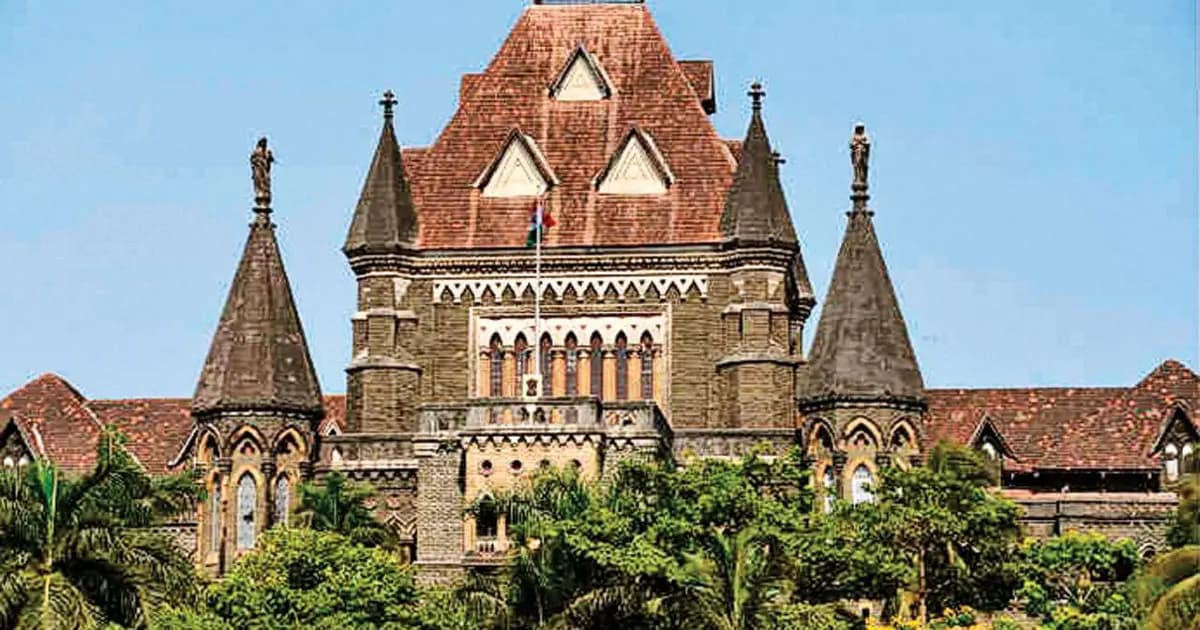
The Bombay High Court, presided over by Justice Sharmila Deshmukh, dismissed an interim application filed by Atyati Technologies Private Limited seeking a temporary injunction to restrain Cognizant Technology Solutions US Corporation from using its newly adopted hexagonal ‘C’ device logo in India. Atyati contended that the logo infringed its copyright and amounted to passing off, alleging that Cognizant’s mark was a copy of Atyati’s orange hexagonal honeycomb‑style device adopted during a 2019 rebranding exercise and used alongside the word mark ‘ATYATI’.
Justice Deshmukh observed that the two logos share a single geometric element – a hexagonal shape – but noted that similarity alone does not establish copyright infringement or passing off. The Court recorded that Atyati’s logo is an orange, upward‑inclined hexagonal honeycomb device, whereas Cognizant’s logo is a blue‑green hexagonal ‘C’ device positioned horizontally. The judge acknowledged the resemblance in shape but stressed that the act of copying, not mere resemblance, is actionable under copyright law.
On the copyright claim, the Court held that Cognizant had prima facie demonstrated independent creation of its logo. There was no material on record to suggest that Cognizant had a reasonable opportunity to access Atyati’s mark. Justice Deshmukh emphasised that the public availability of Atyati’s logo in India could not, by itself, support an inference of copying. She further noted that the time gap between Atyati’s adoption of its logo in 2019 and the creation of Cognizant’s logo was relatively short, weakening any argument that Cognizant had ample opportunity to view the plaintiff’s work.
Regarding the passing off allegation, Atyati advanced a reverse passing off argument, asserting that Cognizant’s global presence and use of a similar logo would lead consumers to believe that Atyati was connected to or endorsed by Cognizant. The Court found this contention unsustainable. It pointed out that Atyati’s logo is always used in conjunction with the word mark ‘ATYATI’, which the judge described as the leading and essential feature of the mark. Consequently, there was no standalone goodwill attached to the device alone. Moreover, the Court highlighted the distinct market segments of the parties: Atyati serves public‑sector and regional rural banks in India, while Cognizant caters to Fortune 500 multinationals worldwide, with sophisticated decision‑makers unlikely to be confused merely by similar geometric logos.
Justice Deshmukh concluded that the traditional trinity of goodwill, misrepresentation, and damage required for a passing off action was not established by Atyati at the interim stage. Accordingly, the claim for copyright infringement and passing off failed to meet the threshold for granting an interim injunction. The interim application was dismissed, allowing Cognizant to continue using its logo pending the final determination of the suit.
Representing Atyati were senior advocate Ravi Kadam along with advocates Hiren Kamod and Abhishek Adke. Cognizant’s counsel comprised senior advocates Virag Tulzapurkar and Venkatesh Dhond, together with advocates Rashmin Khandekar, V Mohini, Aarti Agarwal, Karan Khiani, Rohan Lopes, Anand Mohan and Rashmi Singh.